
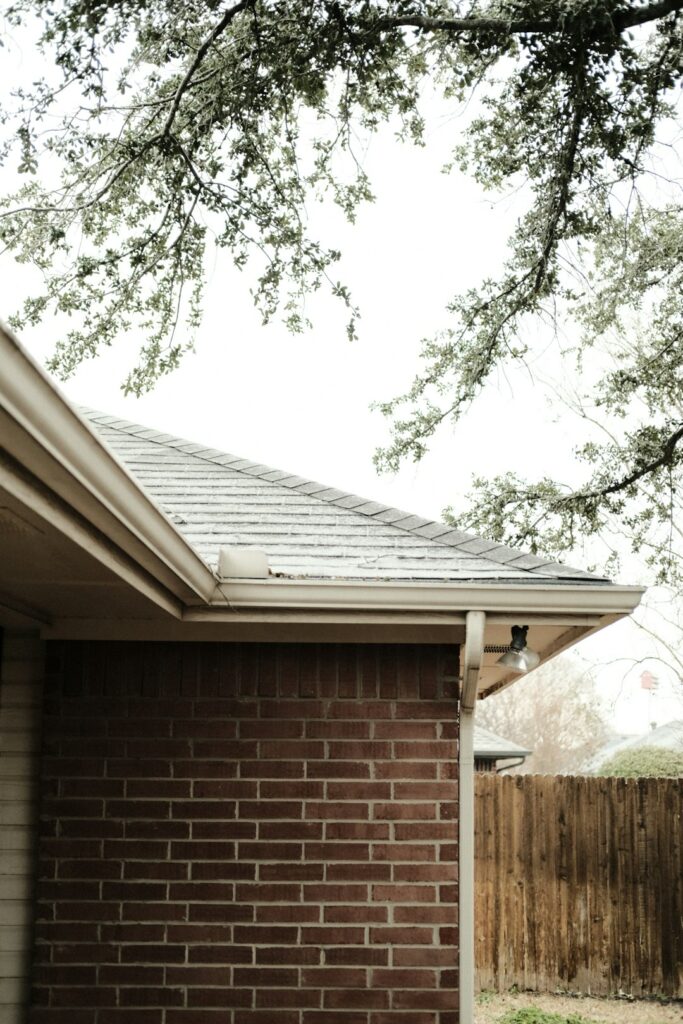
Roof eaves are the lower edges of a roof that extend beyond the exterior walls. They may look like a simple architectural detail, but they help control rainwater, protect siding and foundations, improve ventilation, and reduce exposure to seasonal weather.
In Hudson Falls, NY, where roofs must handle snow, freezing temperatures, spring rain, summer storms, and repeated freeze-thaw cycles, properly designed and maintained eaves are an important part of a durable roofing system.
What are roof eaves?
Roof eaves are the portions of a roof that project past the walls of a house. The underside of this overhang is often called the soffit, while the visible trim along the edge may include fascia.
Together, these components form the roof edge:
- Eave: The horizontal lower edge of a sloped roof.
- Soffit: The enclosed or finished underside of the overhang.
- Fascia: The vertical board or trim at the roof’s edge.
- Gutter: The channel attached near the eave that collects and directs runoff.
Not every roof has the same eave design. Older homes may have wide overhangs with exposed rafters, while newer construction may use enclosed soffits and compact roof edges. The design depends on the roof shape, building style, ventilation plan, and local weather demands.
How do eaves protect a house from water?
The main water-control function of an eave is to move runoff away from the walls. As rain or melting snow travels down the roof, the eave provides a controlled edge where water can enter the gutter or fall clear of the building.
Without enough overhang, water may run directly down siding, window trim, doors, or masonry. Over time, this can contribute to:
- Stained or deteriorated siding
- Rot around fascia boards and roof edges
- Water entry near windows and doors
- Damp foundation walls
- Soil erosion beside the foundation
- Ice formation near walkways and entrances
Eaves do not replace gutters, flashing, or proper roof drainage. They work as part of a system. A gutter that is poorly pitched, clogged, loose, or undersized can still allow water to damage the roof edge and walls.
In areas with heavy snow, the eave also becomes a location where melting snow may refreeze. Ice dams can form when heat escaping from the attic melts snow higher on the roof, allowing water to travel beneath snow and refreeze near the colder eave.
Do roof eaves help with attic ventilation?
Yes. Eaves commonly provide the intake portion of an attic ventilation system. Vented soffits allow cooler outdoor air to enter beneath the roof edge. That air can move upward through the attic and leave through higher exhaust vents.
A balanced ventilation system can help manage:
- Moisture from household activities
- Heat buildup during warm weather
- Uneven roof temperatures
- Condensation on roof sheathing
- Conditions that may contribute to mold or wood decay
Soffit vents only work properly if air can travel from the eaves into the attic. Insulation that blocks the intake openings can reduce airflow. For this reason, attic insulation should be installed in a way that preserves the ventilation path at the roof edge.
More ventilation is not automatically better. Intake and exhaust openings need to be reasonably balanced, and attic ventilation should not be used to hide roof leaks or indoor moisture problems.
Why are eaves useful during winter?
Roof eaves influence how snow, ice, and meltwater behave around the house. A properly designed overhang can keep some precipitation away from exterior walls and help direct runoff into the drainage system.
Winter problems often appear at the eaves because they are exposed to colder outdoor temperatures. Common concerns include:
- Ice dams along the lower roof edge
- Heavy snow loading on gutters
- Icicles falling near entrances or walkways
- Cracked or detached fascia
- Water entering behind gutters
- Wind-driven snow entering poorly protected roof edges
Snow should not be removed from a roof casually. Walking on a snow-covered roof can damage shingles and create a serious fall hazard. Metal tools may also gouge roofing materials. If snow accumulation appears excessive, or if the roof structure is visibly sagging, the situation requires careful evaluation because structural safety may be involved.
What damage can occur at the eaves?
Roof-edge damage may begin with a small leak but spread into several connected components. Water can move behind fascia, into soffits, beneath shingles, or into the ends of roof rafters.
Warning signs include:

- Peeling paint or soft wood below the roof edge
- Discolored or sagging soffit panels
- Rusted, separated, or overflowing gutters
- Shingle edges that appear lifted or curled
- Water stains on exterior walls
- Damp attic insulation near the perimeter
- Daylight visible through areas that should be enclosed
- Birds, insects, or rodents entering through damaged soffits
Some damage is visible from the ground, but roof-edge problems may be hidden behind trim or gutters. A small area of staining does not always show the full extent of moisture intrusion.
How should gutters and eaves work together?
Gutters should be positioned so that roof runoff enters them without water flowing behind or over the back edge. The gutter must also have enough capacity for the roof area that drains into it.
Leaves, twigs, roof granules, and ice can restrict flow. In wooded areas or homes surrounded by mature trees, seasonal cleaning may be especially relevant. Gutters that overflow during ordinary rain may have a clog, improper slope, loose fasteners, inadequate downspouts, or a drainage problem farther along the system.
Downspouts should carry water far enough away from the foundation to avoid concentrating moisture beside the basement or crawl space. Extensions should not discharge onto sidewalks, driveways where water can refreeze, or areas where runoff can flow back toward the building.
Are wide eaves always better?
No. Wider eaves can provide more protection from rain and sun, but they also add weight, wind exposure, and structural demands. They may be unsuitable for certain roof designs or property layouts.
The best eave size depends on the roof pitch, wall height, exterior materials, window placement, drainage design, and local exposure. A very narrow eave can leave walls vulnerable to runoff, while an overhang that is poorly supported may sag or pull away from the building.
Eaves also need appropriate flashing where they meet walls, roof valleys, chimneys, and other roof features. Overhang alone cannot correct a flashing defect.
What maintenance do roof eaves need?
Routine observation helps identify problems before water reaches the framing or interior. Homeowners can safely inspect visible areas from the ground using binoculars, especially after major storms, winter weather, and spring thaw.
Useful maintenance includes:
- Keeping gutters and downspouts clear
- Checking for loose or sagging gutter sections
- Looking for peeling paint, staining, or soft trim
- Confirming that soffit openings are not blocked
- Watching for water spilling behind gutters
- Checking attic edges for damp insulation or condensation
- Trimming branches that scrape the roof or drop debris
Any inspection involving a ladder, steep roof, unstable snow, or damaged structural components creates additional risk. Roof edges can be slippery even when they appear dry, and ladder placement is difficult on uneven ground or icy surfaces.
A well-functioning eave is easy to overlook because it normally works without attention. Its value becomes clear when runoff, ventilation, snow, and exterior protection are all considered as parts of the same roof system.
