
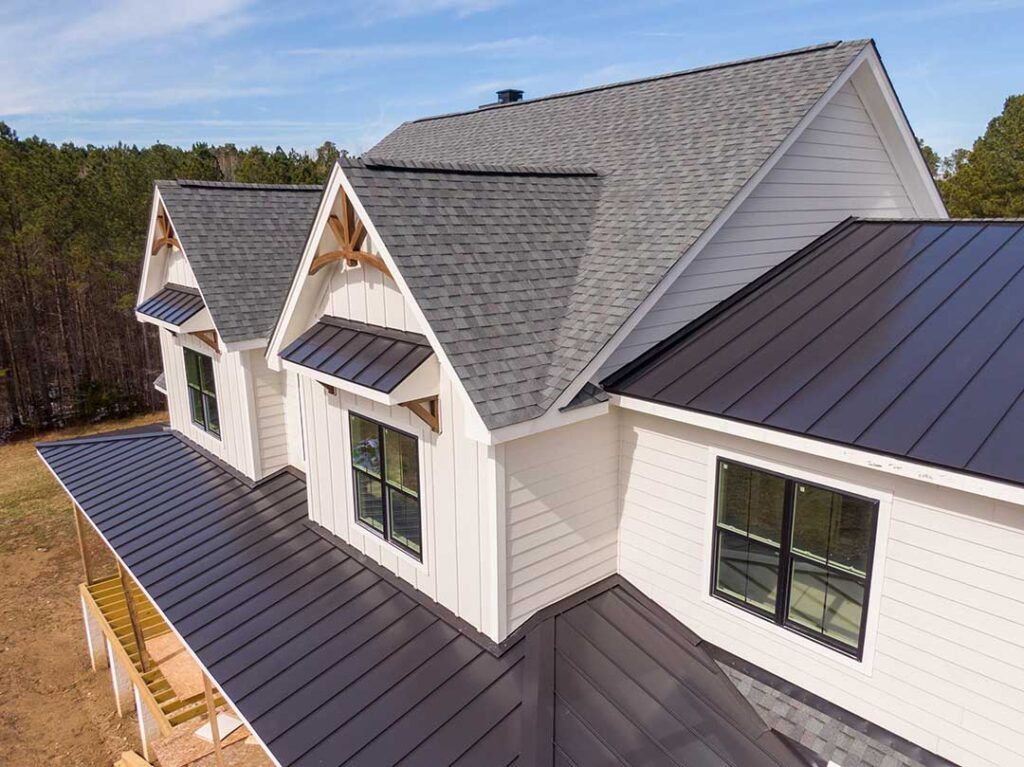
Roof aging does not look the same on every home. Asphalt shingles may lose their protective granules, metal panels may develop rust around fasteners, and slate may remain visually intact while individual pieces become loose or brittle. The right way to judge condition is to match visible changes to the roofing material, roof design, and local weather exposure.
In Hudson Falls, seasonal snow, ice, freezing temperatures, summer heat, wind, and repeated freeze-thaw cycles can gradually affect roofing surfaces and the components beneath them. A roof may still appear serviceable from the ground while flashing, underlayment, ventilation, or decking is beginning to deteriorate.
What does roof aging actually mean?
An aging roof is not simply an old roof. Age describes how long the system has been exposed to weather, while condition describes how well it is still performing.
Two roofs installed in the same year may age differently because of:
- Roof slope and sun exposure
- Ventilation in the attic
- Installation quality
- Previous repairs
- Ice buildup and snow loads
- Tree branches, moss, or accumulated debris
- The quality and type of roofing material
Look for patterns rather than one isolated flaw. A single missing shingle after a windstorm may be a repair issue. Widespread curling, cracking, staining, or sagging suggests broader deterioration.
How can asphalt shingle aging be identified?
Asphalt shingles commonly show aging through surface wear, loss of shape, and reduced resistance to weather. Early signs may be visible from the ground or from a safe ladder position.
Typical indicators include:
- Bare or thin-looking areas where mineral granules have worn away
- Granules collecting in gutters or at downspout outlets
- Shingle edges that curl, claw, crack, or lift
- Blistered areas or dark patches
- Missing shingles or exposed underlayment
- Loose ridge caps and deteriorated seal strips
- Uneven sections that appear wavy or depressed
Granule loss is not always an emergency, especially after a new roof installation, but widespread loss on an older roof means the asphalt surface is becoming less protective. Curling and cracking are more concerning when they occur across several slopes rather than in one small area.
A roof with repeated patching may also be aging even if no single defect appears severe. Multiple layers of repair can make it harder for water to drain correctly and may conceal deterioration underneath.
What does aging look like on a metal roof?
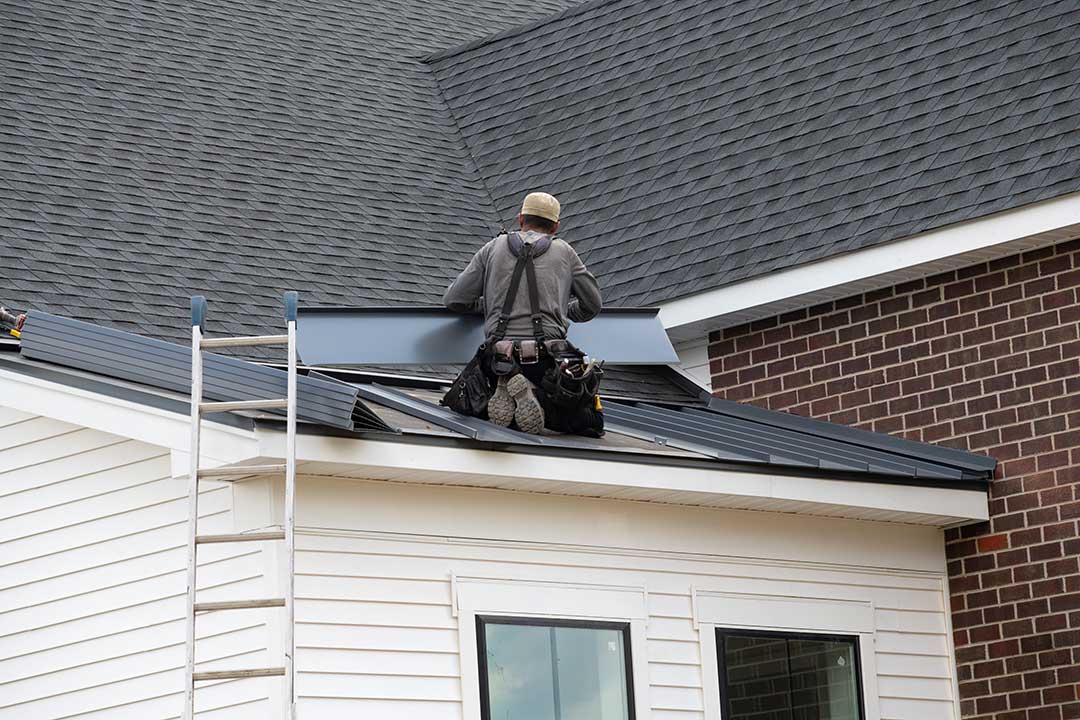
Metal roofs often remain functional for many years, but their weak points are usually connections, seams, coatings, and areas where water collects.
Inspect visually for:
- Rust around screws, fasteners, valleys, or cut edges
- Missing, backed-out, or loose fasteners
- Failed washers and exposed screw holes
- Open seams or lifted panel edges
- Peeling paint or worn protective coatings
- Dents that hold water
- Corrosion around chimneys, vents, skylights, and wall transitions
A small amount of surface discoloration does not necessarily mean a metal roof has failed. The more meaningful concern is active corrosion that has reduced the thickness of the metal or damaged the fastening system.
Metal expands and contracts as temperatures change. Over time, repeated movement can enlarge fastener holes, stress seams, and loosen flashing. Snow sliding from a steep metal roof can also damage gutters, lower roof edges, or objects below if snow guards are absent or poorly positioned.
How do slate and tile roofs show their age?
Slate and tile can have long service lives, but their durability depends on the specific material and the condition of the supporting components. The visible covering may outlast the nails, underlayment, flashing, or roof decking.
Aging signs include:
- Cracked, broken, or missing slates or tiles
- Pieces that have slipped out of alignment
- Flaking or layered separation in natural slate
- Powdering, cracking, or surface erosion in some tile products
- Rusted or exposed fasteners
- Deteriorated mortar around ridges, hips, or wall intersections
- Open or damaged flashing
Walking on slate or tile can cause additional breakage and create a safety hazard. These roofs are best evaluated from the ground, attic, or a properly equipped inspection position rather than by treating them like asphalt shingles.
One common misconception is that a slate or tile roof is automatically in good condition because the material is considered long-lasting. The covering may be durable while the flashing or roof structure underneath is not.
What are the aging signs on wood shingles and shakes?
Wood roofing changes naturally as it weathers. Aging may appear as color variation, surface checking, splitting, curling, or biological growth.
Watch for:
- Splits that extend through individual shingles or shakes
- Cupped, curled, or softened pieces
- Rot near eaves, valleys, and shaded areas
- Moss, algae, or lichen holding moisture against the wood
- Excessive darkening or uneven weathering
- Gaps where pieces have shrunk or fallen away
Wood roofing is particularly sensitive to trapped moisture. Leaves, pine needles, and poor ventilation can keep the surface damp, increasing the risk of decay. In a snowy climate, repeated wetting and drying can make small splits expand over time.
How does a flat or low-slope roof age?
Flat and low-slope systems age differently because water drains more slowly. Ponding, membrane movement, seam failure, and blocked drains may matter more than the appearance of individual shingles.
Signs of aging can include:
- Water that remains after a normal rain
- Blisters, bubbles, wrinkles, or open seams
- Cracked or shrinking sealants
- Loose perimeter edges
- Damaged drain areas or scuppers
- Interior stains below roof penetrations
- Soft decking or sagging around pooled water
A roof does not have to leak continuously to have a drainage problem. Repeated ponding can gradually weaken membranes, seams, insulation, and structural materials. Snow and ice can make low-slope drainage problems more serious during winter.
What should residents check from inside the house?
The attic and upper ceilings often reveal aging that cannot be seen from outside. Look for daylight through the roof boards, damp insulation, water stains, musty odors, or darkened wood near penetrations.
Useful interior clues include:
- Brown or yellow ceiling stains
- Peeling paint near upper walls or ceilings
- Damp rafters or roof decking
- Mold-like growth caused by persistent moisture
- Rust around nails or metal fasteners
- Frost accumulation during cold weather
- Uneven roof decking visible from the attic
Not every ceiling stain is caused by an active roof leak. Condensation, plumbing, ice damming, and bathroom exhaust problems can produce similar marks. The location and timing of the moisture should be considered before assuming the roof covering is the only cause.
Which roof warning signs need prompt attention?
Some conditions should not wait for a convenient seasonal inspection:
- Active dripping or rapidly spreading interior stains
- A visibly sagging roofline
- Large areas of missing roofing material
- Exposed underlayment or decking
- Major storm damage
- Broken slate, tile, or metal panels that could fall
- Water entering near electrical fixtures
- Severe ice buildup or unsafe snow accumulation
Do not walk on a roof that is steep, icy, visibly damaged, or made of fragile materials. From a safe location, document what can be seen and check the attic or interior for moisture. A qualified roof inspector may be necessary when the surface cannot be safely assessed or when structural damage is possible.
Does roof age alone mean replacement is needed?
No. Age is a planning factor, not a final diagnosis. A roof near the expected service life may still be performing well, while a newer roof can deteriorate early because of poor ventilation, storm damage, installation defects, or persistent moisture.
A useful assessment combines:
- The material and installation date
- The number and distribution of visible defects
- Interior evidence of leakage
- Flashing and drainage condition
- Attic ventilation and moisture levels
- Past repairs and storm history
For households in Hudson Falls, a practical time to look closely is after winter ends, after a major wind or hail event, and before another season of heavy snow and ice. Early recognition does not always mean immediate replacement. It does provide a clearer picture of whether the roof needs monitoring, localized repair, or more extensive work.
